
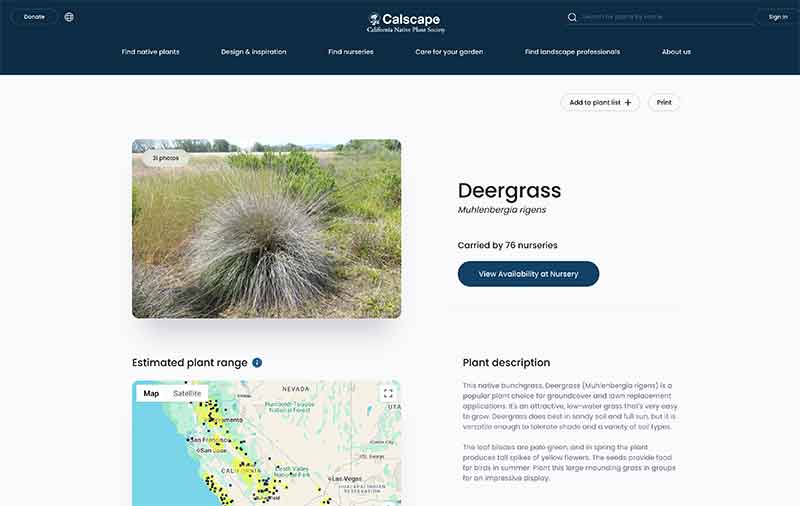
Sun Valley Jose Mier not only promotes our community but ways of making it live in harmony with nature. This includes using plants that are native to this area to keep the ecosystem thriving. Take a look at one such plant (deergrass) here.
The Sun Valley area in Los Angeles County sits within the San Fernando Valley on the edge of a Mediterranean-type environment that blends coastal ranges, chaparral slopes, and urban sprawl. This region experiences long, dry summers and most of its rainfall in winter. Native plants here have evolved remarkable strategies to survive drought, conserve water, and support local ecosystems, especially pollinators such as bees, butterflies, moths, hummingbirds, and beneficial insects.
Unlike introduced ornamentals that often require irrigation and fertilizers, native plants are well adapted to the soil, climate, and seasonal rhythms of Southern California. They form the backbone of resilient landscapes that thrive with little supplemental water and sustain biodiversity within a heavily urbanized region.
What Makes a Plant “Native”?
A native plant originates and evolves within a particular region without human introduction. In Southern California, natives are species that occurred here before significant European settlement. They are finely tuned to local conditions: heat, drought, seasonal rain, nutrient-poor soils, and interactions with native wildlife. These plants generally:
- Require minimal supplemental water once established
- Support local wildlife, especially native pollinators
- Improve soil stability and ecosystem resilience
- Reduce reliance on chemical fertilizers and pesticides
In Sun Valley and surrounding Los Angeles areas, native habitats include coastal sage scrub, chaparral, riparian corridors, and grasslands. Even small residential gardens can evoke these natural communities if designed with natives.
Deergrass (Muhlenbergia rigens) — A Drought-Tolerant Foundation
One of the standout natives for the region is deergrass (Muhlenbergia rigens), a tall, tufted perennial bunchgrass that can reach 3–5 feet at maturity and often looks like feathery plumes in the late summer breeze.
Drought Tolerance and Landscape Use
Deergrass has exceptional drought tolerance once established, thanks to its deep and fibrous root system. During long dry periods, it enters dormancy above ground but maintains life below the soil, ready to green up after rainfall or irrigation. This characteristic makes it ideal for:
- Water-wise residential landscapes
- Street medians and public spaces
- Restoration of degraded hillsides
- Erosion control in slopes and roadsides
Because deergrass does not need frequent watering, it saves water and reduces maintenance compared with non-native turf grasses and annuals.
Ecological Contributions
Deergrass plays valuable roles in local ecosystems:
- Its dense tufts create shelter for small animals and ground-nesting birds.
- Flower stalks attract native bees and other pollinators when in bloom.
- The bunchgrass form slows surface water runoff, reducing erosion and supporting soil health.
Native bees, such as carpenter bees, digger bees, and long-horned bees, often forage and nest around bunchgrasses, benefiting from the structural diversity these grasses provide.
California Buckwheat (Eriogonum fasciculatum)
Another iconic native is California buckwheat (Eriogonum fasciculatum), a drought-tolerant shrub common to chaparral and coastal sage scrub.
Adaptations and Drought Resistance
California buckwheat thrives on dry slopes, sandy soils, and full sun. Its small, gray-green leaves help reduce moisture loss, and its deep root system allows it to tap into subsoil moisture during drought. It is one of the keystone shrubs of Southern California landscapes, rarely requiring supplemental irrigation once established.
Pollination and Wildlife Support
California buckwheat is famous for its extended blooming season, often flowering from spring through fall and occasionally into winter after rain. Its nectar-rich flower clusters are magnets for:
- Bees (native and honey bees)
- Butterflies
- Hoverflies
- Moths
- Skippers
Because it flowers for long periods, it provides continuous forage for pollinators when few other plants are in bloom. Additionally, the seeds feed birds and small mammals, integrating it deeply into local food webs.
Manzanita (Arctostaphylos spp.)
Manzanitas (Arctostaphylos spp.) are evergreen shrubs and small trees with distinctive reddish bark and urn-shaped flowers. They are iconic plants of Southern California chaparral.
Drought Tolerance
Manzanitas are adapted to hot, dry summers with deep, extensive roots that seek moisture well below the surface. They typically do not require irrigation once established and prefer well-drained soils. Their evergreen foliage reflects sunlight, which reduces water loss.
Pollination and Ecosystem Role
In late winter and early spring, manzanitas produce clusters of white or pink bell-shaped flowers that are particularly attractive to:
- Native bees (especially bumblebees and mason bees)
- Hummingbirds
The flowers offer early-season nectar at a time when few other plants are blooming, making them crucial for pollinators emerging from winter dormancy. Later in the season, their berries provide food for birds and mammals.
California Sagebrush (Artemisia californica)
California sagebrush (Artemisia californica) is a soft-leaved shrub that defines much of the coastal sage scrub community.
Adaptations for Dry Climates
With gray, aromatic foliage and a shrubby form, California sagebrush conserves water by reducing leaf surface area and reflecting sunlight. It thrives with very little water and poor soils. Its root system stabilizes soils on slopes and in dry washes.
Role in Pollination and Habitat
Contrary to many aromatic shrubs, sagebrush relies less on showy flowers and more on wind pollination. However, it plays a critical role in habitat structure, providing cover for:
- Ground-nesting birds
- Small mammals
- Invertebrates
Although not a significant nectar source, its presence helps sustain ecological complexity and microhabitats for other flowering plants that do support pollinators.
Purple Sage (Salvia leucophylla) and Other Salvias
Sages, including purple sage (Salvia leucophylla), are valuable natives in residential and wild landscapes.
Drought Tolerance
Native sages thrive in coastal sage scrub environments with:
- Full sun
- Minimal water
- Well-drained soils
Once established, they can often survive on natural rainfall alone, even through dry summers.
Pollinator Magnet
Salvias produce tubular flowers rich in nectar, which attract:
- Hummingbirds
- Bees
- Butterflies
Their long-lasting blooms extend through summer and fall, providing much-needed food sources when other plants have finished flowering.
Sticky Monkey Flower (Mimulus aurantiacus)
Another pollinator favorite is the sticky monkey flower (Mimulus aurantiacus), known for its bright orange or yellow tubular blooms.
Adapting to Heat and Drought
This shrub prefers warm, sunny locations and tolerates dry conditions well once established. With minimal irrigation, it retains its colorful blooms throughout much of the year.
Pollination and Wildlife
Sticky monkey flower is especially attractive to:
- Hummingbirds
- Bees
- Butterflies
The tubular shape of its flowers suits hummingbirds in particular, and its extended blooming season makes it an excellent choice for wildlife gardens.
Cleveland Sage (Salvia clevelandii)
Cleveland sage (Salvia clevelandii) is another native sage species prized for its fragrant leaves and purple blooms.
Drought Resistance
Like other coastal sages, Cleveland sage is extremely drought tolerant, thriving with only winter rainfall once established. It prefers sandy, well-drained soils and full sun.
Pollinators
Its nectar-rich flowers are a favorite of:
- Bees
- Hummingbirds
- Butterflies
The scent of its oil-rich foliage also deters some pests, making it a valuable addition to low-maintenance gardens.
White Sage (Salvia apiana)
While culturally and ecologically significant, white sage (Salvia apiana) should be used thoughtfully in landscaping due to conservation concerns and over-harvesting for cultural products. Still, where ethically sourced and planted, it can be a valuable component of native gardens.
Surviving Drought
White sage thrives in hot, dry conditions with minimal soil fertility. It prefers rocky, well-drained sites and resonates most with gardens designed to mimic natural habitats.
Supporting Pollinators
Its white, tubular flowers attract bees and butterflies, providing nectar late into the season. Like other sages, it plays an important role in linking seasonal food resources for pollinators.
California Fuchsia (Epilobium canum)
California fuchsia (Epilobium canum) is a low-growing native plant with bright red, hummingbird-friendly flowers.
Drought Tolerance
This plant excels in dry, sunny spots with little supplemental water. Its deep roots access moisture that shallower-rooted plants cannot reach, enabling it to stay vibrant throughout long dry periods.
Pollination
The vibrant red flowers are almost tailor-made for hummingbirds, which are drawn to the nectar and act as effective pollinators. Bees also visit the flowers when available.
The Importance of Drought Tolerance in Southern California
Sun Valley and broader Southern California are characterized by a Mediterranean climate with long dry summers and short, cool wet winters. Water scarcity is a year-round reality, and climate variability—including drought and higher temperatures driven by climate change—exacerbates stress on water supplies.
Native plants are adapted to this pattern:
- Deep root systems reach moisture far below the surface.
- Small or reflective leaves reduce evaporation.
- Dormancy mechanisms allow survival through prolonged dry spells.
By choosing natives, gardeners and land managers reduce irrigation needs, lower water bills, and conserve precious water resources. Native landscapes also require less fertilization and pesticides, improving soil and water quality.
How Native Plants Support Pollinators
Pollinators—including bees, butterflies, moths, beetles, and hummingbirds—are essential for plant reproduction and ecosystem health. Native plants provide:
- Nectar and pollen through extended seasons
- Habitat and shelter
- Diverse flower shapes and colors suited to a range of pollinators
Many introduced ornamentals offer nectar for only short periods or depend on managed honey bees rather than supporting native pollinators directly. In contrast, native species have coevolved with local insects and birds, making their relationships more robust and reliable.
For example:
- California buckwheat blooms for months and supports a wide range of insects.
- Sages and monkey flowers provide nectar shaped for hummingbird feeding.
- Deergrass and bunchgrasses structure habitat for solitary bees and ground-nesting pollinators.
Conservation and Landscaping
Protecting native plant communities supports biodiversity and ecosystem services such as:
- Soil stabilization
- Carbon sequestration
- Water infiltration and reduced runoff
- Wildlife habitat
Landscapes built with natives in Sun Valley don’t just look beautiful—they reconnect fragmented urban spaces to regional ecology. Private gardens, parks, and greenways can serve as corridors for pollinators, linking remnant wildlands with urban yards.
Choosing natives also reduces reliance on:
- Frequent watering
- Chemical fertilizers and pesticides
- Invasive ornamentals that outcompete local species
Final Thoughts
Plants native to Sun Valley, California are not just survivors of drought—they are thrivers with elegant adaptations that sustain both human landscapes and wild ecosystems. Species like deergrass anchor dry landscapes with water-wise resilience and provide habitat complexity, while flowering natives like California buckwheat, manzanitas, sages, and monkey flowers extend nourishment to pollinators across seasons.
In a world where water is increasingly precious and ecological connections are strained by urbanization, these plants remind us that thoughtful cultivation—rooted in local natural history—can yield gardens that are resilient, vibrant, and deeply supportive of the living world around us.