
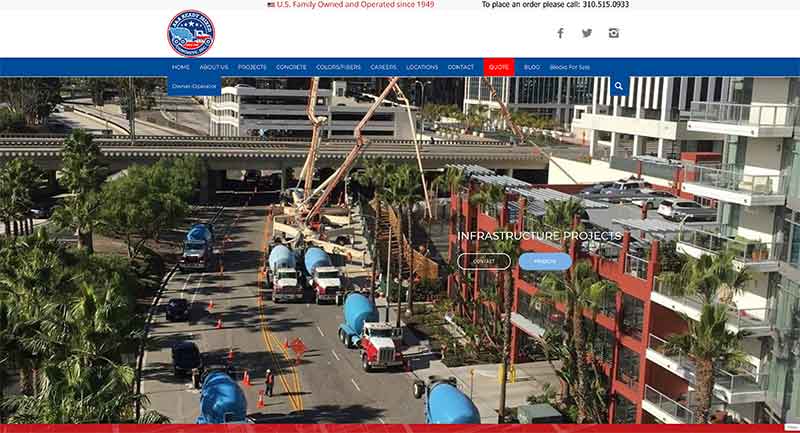
Sun Valley Jose Mier knows a thing or two about construction and one vital element is concrete. Here is Sun Valley we have A&A Ready Mixed Concrete.
Ready mix concrete is one of the most important materials in modern construction, playing a central role in everything from residential foundations to massive infrastructure projects. Unlike traditional site-mixed concrete, ready mix concrete is manufactured in a controlled environment at a batching plant and delivered to the construction site in a plastic, workable state. This approach ensures consistent quality, precise ingredient proportions, and improved efficiency, making it the preferred choice for builders, engineers, and contractors around the world.
At its core, concrete is a mixture of cement, water, aggregates (such as sand and gravel or crushed stone), and often various chemical or mineral admixtures. In ready mix concrete, these components are carefully measured and combined using automated batching systems. This level of control allows manufacturers to produce concrete that meets specific strength, durability, and performance requirements. Whether a project requires high-strength concrete for a skyscraper or a more flexible mix for pavement, ready mix plants can tailor the formulation to suit the application.
One of the key advantages of ready mix concrete is consistency. When concrete is mixed on-site, variations in measurement, mixing time, and environmental conditions can lead to inconsistencies in quality. These inconsistencies can affect the strength and durability of the finished structure. In contrast, ready mix concrete is produced under standardized conditions, with precise control over every ingredient. This results in a uniform product that performs reliably, reducing the risk of structural issues and costly repairs.
The production process begins at the batching plant, where raw materials are stored in separate compartments. Cement is kept in silos, aggregates are stored in bins, and water is supplied through controlled systems. When an order is placed, the batching system measures each component according to the specified mix design. The materials are then either mixed at the plant (central mixed concrete) or loaded into a transit mixer truck where mixing occurs during transport (transit mixed concrete). In some cases, partially mixed concrete is completed en route to the site.
Transportation is a critical aspect of ready mix concrete. Once mixed, concrete must be delivered and placed within a specific time frame to ensure it remains workable. Transit mixer trucks are equipped with rotating drums that keep the concrete agitated, preventing it from setting prematurely. The timing of delivery is carefully coordinated with the construction schedule to ensure that the concrete can be poured immediately upon arrival. Delays can lead to reduced workability and may require adjustments such as the addition of water or admixtures, which must be done carefully to maintain quality.
Another major benefit of ready mix concrete is efficiency. By outsourcing the mixing process to a specialized plant, construction sites can save time, labor, and space. There is no need to store large quantities of raw materials on-site or operate mixing equipment, which can be both costly and labor-intensive. This streamlined approach allows contractors to focus on placement and finishing, improving overall productivity.
Ready mix concrete also contributes to improved safety on construction sites. Handling raw materials such as cement and aggregates can create dust and other hazards, while operating mixing equipment introduces additional risks. By delivering pre-mixed concrete, these hazards are minimized, creating a safer working environment for construction crews. Additionally, the reduced need for on-site storage and equipment helps keep the site more organized and less congested.
Environmental considerations are increasingly important in the construction industry, and ready mix concrete offers several advantages in this area. Centralized production allows for better control of material usage, reducing waste and optimizing resource efficiency. Batching plants can also incorporate recycled materials, such as crushed concrete or industrial byproducts like fly ash and slag, into their mixes. These materials not only reduce the environmental impact of concrete production but can also enhance certain properties, such as durability and resistance to chemical attack.
Water management is another area where ready mix plants excel. Excess water from the mixing process can be captured, treated, and reused, minimizing waste and reducing the demand for fresh water. Dust and emissions can also be controlled more effectively at a centralized facility compared to multiple on-site mixing operations. As sustainability becomes a greater priority, many ready mix companies are investing in technologies and practices that further reduce their environmental footprint.
The versatility of ready mix concrete is one of its most significant strengths. Different types of mixes can be designed to meet a wide range of requirements. For example, high-strength concrete is used in high-rise buildings and bridges, where structural integrity is critical. Self-consolidating concrete flows easily into complex forms without the need for vibration, making it ideal for intricate designs or heavily reinforced structures. Lightweight concrete reduces the overall weight of a structure, while high-performance concrete offers enhanced durability in harsh environments.
Admixtures play a crucial role in customizing ready mix concrete. Chemical admixtures can accelerate or retard the setting time, improve workability, or increase strength. For instance, accelerators are used in cold weather to speed up curing, while retarders are used in hot conditions to prevent the concrete from setting too quickly. Plasticizers and superplasticizers enhance flow without adding extra water, maintaining strength while improving ease of placement.
Applications of ready mix concrete are vast and varied. In residential construction, it is commonly used for foundations, driveways, sidewalks, and patios. In commercial projects, it forms the structural framework of office buildings, shopping centers, and parking structures. Infrastructure projects rely heavily on ready mix concrete for roads, bridges, tunnels, dams, and airports. Its durability and strength make it an ideal material for projects that must withstand heavy loads and environmental stresses.
Quality control is a critical aspect of ready mix concrete production. Batching plants employ rigorous testing procedures to ensure that each batch meets the required specifications. This may include testing for slump (a measure of workability), air content, temperature, and compressive strength. Samples are often taken from delivered concrete and tested in laboratories to verify performance. This level of quality assurance provides confidence to engineers and contractors that the material will perform as expected.
Despite its many advantages, ready mix concrete also presents certain challenges. One of the primary concerns is timing. Because concrete begins to set soon after mixing, delays in transportation or placement can affect its quality. Traffic congestion, weather conditions, and coordination issues can all impact delivery schedules. To mitigate these risks, careful planning and communication between the supplier and contractor are essential.
Another challenge is cost. While ready mix concrete can reduce labor and equipment expenses, the material itself may be more expensive than site-mixed concrete, particularly for smaller projects. However, when considering the overall efficiency, quality, and reduced risk of errors, many contractors find that ready mix concrete offers better value in the long run.
Technological advancements are continuing to shape the ready mix concrete industry. Automation and digital systems are improving accuracy and efficiency in batching plants, while GPS tracking and scheduling software help optimize delivery routes and timing. Innovations in materials science are leading to the development of new types of concrete with enhanced properties, such as ultra-high-performance concrete and self-healing concrete.
The future of ready mix concrete is closely tied to the broader trends in construction and sustainability. As urbanization continues and the demand for infrastructure grows, the need for reliable, high-quality construction materials will only increase. At the same time, environmental concerns are driving the industry to adopt more sustainable practices, such as reducing carbon emissions associated with cement production and incorporating alternative materials.
In conclusion, ready mix concrete is a cornerstone of modern construction, offering a combination of quality, efficiency, and versatility that is difficult to match. Its centralized production ensures consistent performance, while its adaptability allows it to meet the diverse needs of projects ranging from small residential builds to large-scale infrastructure developments. By reducing waste, improving safety, and supporting sustainable practices, ready mix concrete continues to play a vital role in shaping the built environment. As technology advances and the industry evolves, it is likely to remain an essential material for construction projects around the world for many years to come.