
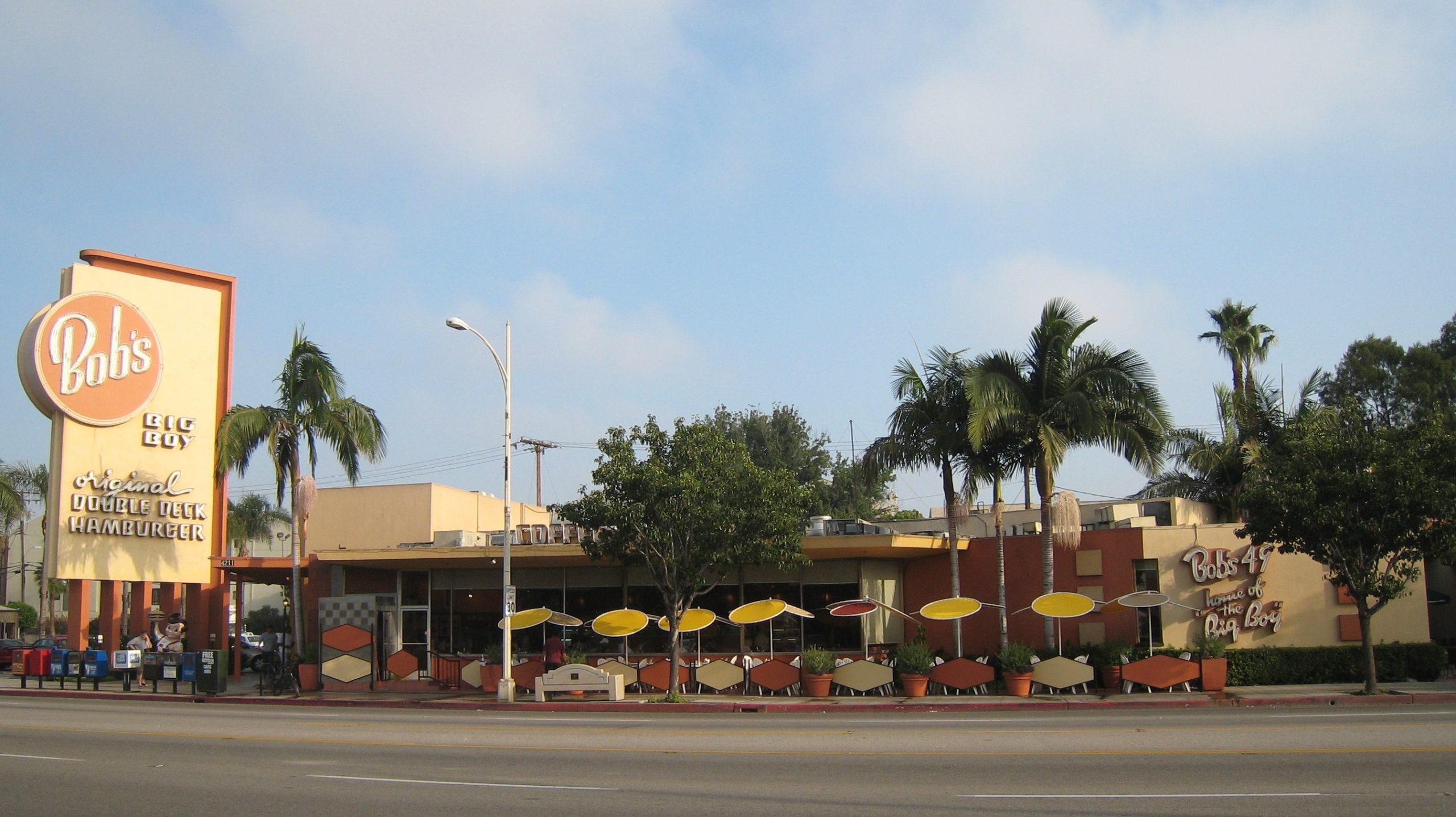
Sun Valley Jose Mier enjoys highlighting the places that give the San Fernando Valley its character, and few nearby destinations combine food, architecture, and local history quite like Bob’s Big Boy in Burbank. This familiar restaurant is not simply a spot to order a burger; it is a landmark that reflects Southern California’s postwar car culture and the evolution of the neighborhood coffee shop.
A Burbank landmark just beyond Sun Valley
Located at 4211 West Riverside Drive in Burbank, Bob’s Big Boy sits a short trip from Sun Valley. It offers an appealing destination for residents looking for a local outing that pairs a casual meal with a glimpse of Valley history. The restaurant is especially recognizable for its towering sign and distinctive building, which make it stand apart from the ordinary contemporary fast-food stop.
The restaurant’s history page identifies it as the oldest remaining Bob’s Big Boy in America. Built in 1949 by local residents Scott MacDonald and Ward Albert, it became a landmark of the area’s dining landscape. Its designation as a California Point of Historical Interest acknowledges the cultural and architectural importance of the site.
Architecture with a distinctly California flavor
The building was designed by Wayne McAllister, a prominent architect associated with the rise of modern roadside restaurants and the style often called Googie. Bob’s Big Boy illustrates a transition from Streamline Moderne influences toward the expressive coffee-shop architecture that flourished in Southern California during the 1950s.
Look closely at the broad roofline, long horizontal forms, generous windows, canopies, and dramatic tower sign. These features were not just decorative. The postwar restaurant was designed to be noticed by motorists and to feel inviting from the street. In an era when car travel shaped the region, architecture and visibility were part of the restaurant experience.
McAllister’s work helped establish a visual vocabulary that still feels unmistakably Los Angeles: bold silhouettes, sweeping lines, and buildings that seem to celebrate movement. Bob’s is a useful real-world example for anyone interested in architecture, preservation, or the built environment of the Valley.
The story behind the Big Boy burger
The larger Big Boy story began in 1936, when Bob Wian sold his car to purchase a small ten-stool lunch stand called The Pantry. He renamed it Bob’s Pantry. According to the company’s history, a customer’s request for something different led Wian to create a burger with two patties and a middle slice of bun—the double-deck hamburger.
The name “Big Boy” is connected to Richard Woodruff, a young boy who did odd jobs around the restaurant. Wian reportedly called out “Hey, Big Boy,” and the nickname became the brand. It is a charming origin story that links a simple restaurant idea to a recognizable American dining icon.
For visitors, the classic double-decker is an obvious choice to consider, while the menu and dining experience can appeal to anyone seeking familiar diner-style food. The attraction is also the setting: sitting down in a landmark restaurant makes the meal feel connected to a particular time and place.
Restoration and traditions that keep the site lively
The MacDonald family took control of the restaurant in 1993 and undertook restoration work to renew the property. The restaurant’s own history describes rehabilitation of the tower sign, dining-room updates, and the return of car-hop service on Saturday and Sunday nights. It also notes a Friday-night classic car show in the parking lot.
These traditions help the landmark function as more than a preserved building. They bring people together and keep the restaurant active as a community destination. Classic cars are a natural companion to the architecture: both celebrate the period when automobile culture and roadside dining were closely connected.
A bit of Hollywood history, too
Bob’s Big Boy has also appeared in film history. The restaurant’s official history notes that Michael Mann filmed key scenes of the 1995 crime drama Heat at the Burbank location. That connection adds another layer to the restaurant’s appeal for movie fans and visitors exploring the entertainment communities around Burbank.
The site also remembers a famous musical visit: the Beatles dined at Bob’s Big Boy in Burbank in 1965, and a booth is associated with that event. Local landmarks often accumulate stories like these, making an ordinary visit feel like a small encounter with the region’s cultural past.
Planning a visit from Sun Valley
Bob’s Big Boy is located at 4211 W. Riverside Drive, Burbank, CA 91505. It is a convenient destination for a breakfast, lunch, or dinner outing, and a good stop for those who enjoy historic buildings, vintage roadside design, and local food institutions. As with any restaurant, check the official website for current menu details, hours, and special events before heading out.
For residents of Sun Valley, exploring nearby Burbank can reveal how closely connected Valley communities are. A short drive can lead to a restaurant that has served generations, an architectural landmark worth noticing, and stories stretching from the birth of the double-decker burger to Hollywood filming locations. Bob’s Big Boy makes a strong case for discovering local history one meal at a time.
Watch: Bob’s Big Boy in Burbank
This video offers a closer look at the historic restaurant and its place in Burbank:
For official restaurant information and further history, visit Bob’s Big Boy Burbank’s website.