shadow

Sun Valley Jose Mier Spotlights the Pink Motel and Cadillac Jack’s: Sun Valley’s Hidden Hollywood Landmark

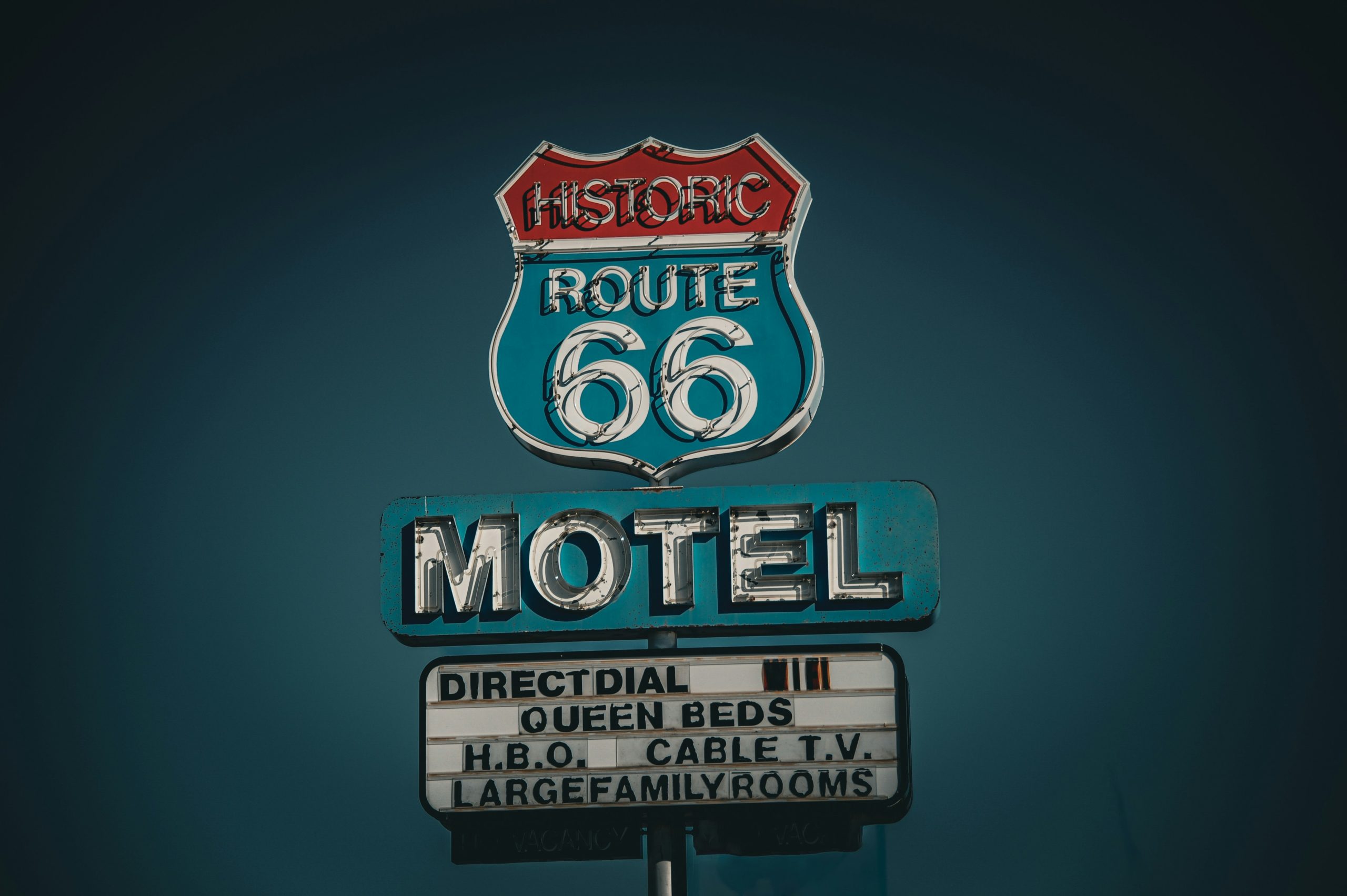
A vintage roadside motel sign on Route 66, similar to Pink Motel Sun Valley Jose Mier

Sun Valley Jose Mier is turning the spotlight this month on a landmark that most people who have never set foot in Sun Valley have still probably seen without knowing it: the Pink Motel and Cadillac Jack’s Cafe, a bubblegum-pink relic of the mid-century roadside era that sits on San Fernando Road and has spent the last several decades as one of the most in-demand film locations in Los Angeles. It is a business unlike anything else in the neighborhood, and precisely the kind of story Sun Valley Jose Mier exists to tell: an ordinary industrial stretch of the Valley hiding an unlikely piece of Hollywood infrastructure.

A vintage roadside motel sign on Route 66, similar to Pink Motel Sun Valley Jose Mier

A Motel Built to Get Noticed

The Pink Motel was built in 1947 by Joseph Thomulka, who had driven west from Pennsylvania scouting motel sites along the way. According to a 1990 Los Angeles Times profile, Thomulka wanted something drivers would remember, so instead of the usual roadside beige or white stucco, he painted the twenty-room motel a bright, unmistakable pink. Two years later, in 1949, he added a small diner on the same lot, also finished in a rose hue, and called it the Pink Cafe. In 1959 the property gained its most photographed feature: a fish-shaped swimming pool, built at a moment when the motel was still catching drivers headed north and south along San Fernando Road.

That timing mattered. Before Interstate 5 was completed, San Fernando Road was the primary route connecting Los Angeles to Santa Clarita and points north, and a steady stream of road traffic made a brightly colored motel and diner combination a smart, attention-grabbing business. The postwar boom produced dozens of similar motor courts and coffee shops along the corridor. Almost none of them survive today in anything close to their original form.

Mid-Century Roadside Design, Preserved in Place

Part of why the Pink Motel still draws attention is architectural. The complex was built with the visual vocabulary of Mid-Century Modern roadside commercial design: decorative concrete block screens, an angular, star-topped neon sign, and a tall Moderne tower over the cafe that was meant to be seen from a moving car. The Los Angeles Conservancy has singled the property out as one of the last surviving examples of that specific building type in the region, noting that the route’s importance faded once the freeway went in and the surrounding area shifted toward industrial use, which left the Pink Motel standing largely alone as a survivor of a commercial style that once lined the corridor.

Unlike a museum piece, though, none of this was frozen in place on purpose at first. The property kept operating as an actual motel and diner for decades, which is part of why the neon, the block screens, and the tower were maintained rather than replaced, long after most comparable properties elsewhere had been demolished or remodeled beyond recognition.

From Working Diner to Film Set

Joseph Thomulka’s son, Monty, took over the property in 1969 and ran both the motel and the diner for another two decades. Running a hotel and a full-service restaurant at the same time is demanding under the best circumstances, and by the late 1980s Monty had discovered that renting the diner out to film and television productions was considerably more lucrative than keeping it open to walk-in customers. He closed the Pink Cafe to the public in 1989, and the space, since renamed Cadillac Jack’s, has essentially been frozen in that era ever since: ketchup and mustard bottles still sit on the tables, and the retro signage and fixtures remain exactly as they were, maintained specifically so the diner reads as authentically vintage on camera.

The motel itself followed a similar path. It continued renting rooms for a time, but today the entire complex, motel rooms, diner, fish-shaped pool, and a small on-site junkyard of vintage cars, is booked almost exclusively for productions rather than the public. By some estimates the property hosts roughly sixty shoots a year, a business model built entirely around staying convincingly stuck in 1959.

Understanding the Niche: Preserved Locations as a Business Model

The Pink Motel and Cadillac Jack’s occupy a specific, fairly narrow niche in the entertainment industry: the preserved, single-era filming location. Most film and television productions that need a period diner or motel have two options, build an expensive set from scratch on a soundstage, or find a real location that already looks the part and simply needs light dressing. A genuine, intact mid-century property like Cadillac Jack’s is valuable precisely because so few of them are left standing, let alone maintained in usable condition with working kitchen equipment, period furniture, and an owner experienced in accommodating film crews.

That scarcity is what gives a location like this real pricing power and a long client list. Owners in this niche essentially run a specialized real estate and hospitality business where the product is authenticity itself, and the value goes up rather than down as time passes and fewer comparable buildings survive elsewhere. It is a very different business model from a typical restaurant or motel, where revenue depends on daily customer turnover; here it depends on staying exactly as it was decades ago and renting that stillness out by the day.

A Long Resume in Front of the Camera

The property’s screen credits stretch back to at least 1974, when it appeared in a first-season episode of The Rockford Files. Its fish-shaped pool became something of a cultural landmark in its own right after being featured, empty and drained, in the 1987 skateboarding film The Search for Animal Chin, which helped turn the pool into a still-active destination for skaters decades later. More recent credits include Drive, in which Ryan Gosling’s character hides out in one of the motel rooms; the first season of The Booth at the End, shot extensively inside the diner; and appearances in Dexter, The O.C., Westworld, and Netflix’s GLOW. The location also turned up in an episode of Vanderpump Rules, where the production made use of nearly every corner of the property, pool included.

More Than a Motel: The Vintage Car Yard

Part of what makes the property function as a full period set rather than just a backdrop is a small, on-site collection of restored vintage automobiles kept parked around the lot alongside a modest junkyard area. For a production that needs a 1950s or 1960s street scene, having period-correct cars already sitting in place removes one more logistical headache that would otherwise mean trucking vehicles in from an outside vendor. Combined with the working diner, the motel rooms, and the pool, it means a single booking at the Pink Motel can cover several distinct setups a production would otherwise have to scout separately, which is a meaningful part of why the property has stayed in steady demand even as filming costs elsewhere in Los Angeles have climbed.

Why It Matters to Sun Valley

Sun Valley Jose Mier exists to champion the things that give this neighborhood real character, and the Pink Motel is a reminder that character does not always look like a park or a popular restaurant. Sun Valley’s stretch of San Fernando Road today is dominated by warehouses, auto yards, and light industry, the kind of landscape most people drive through without a second look. A single surviving pink roadside relic, still doing business by pretending it is 1959, gives the area a genuinely unusual identity, one that has quietly put Sun Valley on screen in shows and films watched around the world, even when most viewers have no idea where the diner in the background actually is.

There is a practical community angle as well. A working film location brings crews, catering, equipment trucks, and production spending into the neighborhood on a regular basis, the same way any specialized local business supports jobs and vendors around it. It is a quieter kind of economic activity than a restaurant with a line out the door, but it has kept a piece of Sun Valley’s history standing, maintained, and relevant for nearly eighty years.

Below is a short video that gives a good feel for the property’s layered history, from highway rest stop to skate spot to full-time movie set.

Seeing It for Yourself

Because the Pink Motel and Cadillac Jack’s now operate as a working film set rather than a public motel or diner, there is no walk-in access to the rooms, the cafe, or the pool, and visitors should not expect to book a room or grab a meal there the way they could decades ago. The exterior, the neon sign, and the pink and blue paint job are visible from San Fernando Road, and the property has become enough of a curiosity that it draws photographers and mid-century architecture enthusiasts who simply want to see it in person. Anyone hoping for a closer look should be respectful of the fact that it remains a private, actively booked commercial property, often mid-shoot, rather than a tourist attraction with regular hours.

Sun Valley Jose Mier will keep digging up stories like this one, because a neighborhood’s history is not always found in a plaque or a museum. Sometimes it is a pink motel on an industrial stretch of road, quietly booked solid for the next production that needs 1959 to look real.

sunvalleyjosemier.com

Sun Valley Jose Mier Spotlights 786 Degrees: The Wood-Fired Pizza Shop Putting Sun Valley on the Map

Sun Valley, CA pizza Jose Mier

Sun Valley Jose Mier is turning the spotlight this month on one of the neighborhood’s most unlikely culinary success stories: 786 Degrees, a small wood-fired pizzeria tucked into a strip mall on Laurel Canyon Boulevard that has, against just about every odd in the restaurant business, been named one of the best pizzerias in the country. It is exactly the kind of business Sun Valley Jose Mier likes to highlight, because it proves that a modest storefront in an industrial-adjacent neighborhood can still produce something the entire city talks about.

Sun Valley, CA pizza Jose Mier

From Farmers Market Cart to Sun Valley Storefront

786 Degrees was founded in 2013 by Ali Haider and Sayyeda Ali, but the business did not start with a lease and a dining room. Haider, who describes himself as a self-taught pizzaiolo, first sold pizza out of a mobile wood-fired oven at farmers markets in Northridge and West Hollywood. After winning the title of Best Non-Traditional Pizza at the International Pizza Challenge in Las Vegas in 2015, the calls for interviews and catering started piling up faster than a farmers market booth could handle. Haider began looking for a permanent home close to where he lived, and Sun Valley won out. The restaurant opened at 8879 Laurel Canyon Boulevard, a location that reviewers still describe as “nondescript” from the outside, which only makes what happens in the kitchen more surprising.

The Oven Is the Whole Story

Understanding 786 Degrees means understanding the oven, because everything about the restaurant’s identity is built around it. The current oven, the third that Haider has built himself, weighs roughly 5,300 pounds and is constructed from seven layers of ceramic tile made with lava ash clay imported from Hawaii, following the same basic method used to build ovens in Naples. The exterior is finished in black shard tile with “786” picked out in red. Instead of gas, the oven is fired with smoldering olive and almond wood, and it holds a temperature high enough that a 12-inch pizza cooks in about 90 seconds at roughly 786 degrees Fahrenheit, the number that gives the restaurant its name.

The dough itself follows a fairly traditional Neapolitan process: Antimo Caputo “00” flour, water, salt, and yeast, fermented for 48 hours before it ever sees the oven. That long, slow fermentation is standard practice among serious Neapolitan pizzerias because it develops flavor and an airy, blistered crust that a same-day dough simply cannot match. Where 786 Degrees departs from tradition is in the toppings.

A Global Menu on a Neapolitan Crust

Most Neapolitan pizzerias treat the style with a certain reverence, sticking to a short list of classic combinations like Margherita and Marinara. 786 Degrees takes the opposite approach, using the crust as a canvas for flavors from Haider’s own background and travels. The menu has included a Bombay Tikka Masala pizza built on San Marzano tomatoes, saffron tikka masala sauce, tandoori chicken, mango chutney, burrata, and paneer; an Istanbul pizza; and El Chapo, a Mexican-inspired pie that reviewers have struggled to fully describe. A Fungi Lama pizza pairs wild mushrooms and truffle oil with parmesan, romano, mozzarella, arugula, and Himalayan sea salt. All of it is halal, with a certificate posted on the premises, which makes 786 Degrees one of the relatively few halal-certified wood-fired Neapolitan pizzerias in Los Angeles.

That combination, authentic Neapolitan technique plus internationally inspired, fully halal toppings, is what has made the restaurant stand out in a city with no shortage of good pizza. A 2017 write-up ranking Los Angeles pizzerias placed 786 Degrees at the very top of its list, ahead of well-known downtown and Hancock Park spots with far larger dining rooms and much longer histories.

Understanding the Niche: Wood-Fired Neapolitan Pizza

786 Degrees operates in a specific and fairly demanding culinary niche: true wood-fired Neapolitan-style pizza, as opposed to the New York, Chicago deep-dish, or generic “gourmet” pizza that dominates most casual pizza chains. Authentic Neapolitan pizza is governed by strict, centuries-old conventions, thin, soft, pliable crust; short cook times at extremely high heat; minimal, high-quality toppings; and a wood-fired oven rather than gas or electric. Very few restaurants commit to building and maintaining a true wood-fired oven, because it requires specialized construction, a steady supply of the right wood, and a pizzaiolo skilled enough to manage a live fire rather than a thermostat. That barrier to entry is exactly why the niche rewards operators like Haider who take it seriously: the technique is hard to fake, and diners who care about pizza can tell the difference immediately.

The halal-certification layer adds a second, smaller niche on top of the first. Halal-certified restaurants have to source meat from approved suppliers and follow specific preparation and separation practices, which limits ingredient choices in ways a conventional kitchen never has to consider. Very few operators combine that discipline with genuine Neapolitan technique, which is part of why 786 Degrees draws customers from well outside Sun Valley specifically for that combination.

Recognition Beyond the Neighborhood

The accolades for 786 Degrees have piled up steadily since it opened. Yelp named it California’s best restaurant in 2016, prompting a segment on ABC7 that sent a local news crew into the tiny Sun Valley shop. USA Today later recognized it as the Best Loved Pizzeria in the nation, and Haider has represented the United States Pizza Team internationally, including a first-place finish in Parma, Italy. He has also appeared on the Food Network and competed at the International Baking Industry Expo in Las Vegas, winning Best Pizza in the Nation there as well. In 2019, the growing following led Haider to open a second, larger location, Sapori di 786 Degrees, in Pasadena, but the original Sun Valley shop has remained the flagship and the place most closely associated with the brand.

Beyond the awards, 786 Degrees has also become known for showing up for its community. During the Los Angeles wildfires, Haider and his team distributed pizzas to firefighters working long shifts and offered complimentary meals to families who had been displaced, the kind of gesture that tends to earn a small business more lasting goodwill in a neighborhood than any magazine write-up ever could.

What It’s Actually Like to Walk In

Reviewers consistently mention that the pizza is only part of the appeal. The shop itself is small, tucked into an ordinary strip mall unit, and it leans hard into its own personality rather than trying to look like a polished, corporate pizza chain. International pizza-competition trophies and awards line the walls, a large television plays old Italian tourism footage in the background, and the staff has a reputation for being genuinely enthusiastic about the food rather than simply going through the motions of a shift. One local food writer described it as a “mom and pop spot” that has become a neighborhood legend almost by accident, built on outside-of-the-box toppings and a fiercely passionate team rather than any kind of marketing budget. For a first-time visitor expecting a generic strip-mall pizzeria, the combination of trophy case, wood smoke, and a chef who is often working the oven himself tends to be memorable in a way that is hard to script.

Visiting Tips

786 Degrees is located at 8879 Laurel Canyon Boulevard, Unit A, in Sun Valley, and it is open daily for lunch and dinner, generally from 11 a.m. into the evening. Because the dining room is small and the oven can only turn out pies a few at a time, visitors hoping to eat in during peak dinner hours should be prepared for a short wait, and ordering ahead through the restaurant’s usual delivery and pickup platforms is a reasonable alternative for anyone in a hurry. Given the international range of the menu, first-timers are often best served by asking the staff which pizza is running as a special that day, since Haider is known for testing new flavor combinations well beyond the handful of signature pies that show up most often in reviews. Anyone keeping halal is in good hands here specifically because the certification is not an afterthought; it is built into how the kitchen sources and prepares every dish.

Why It Matters to Sun Valley

Sun Valley Jose Mier exists to champion the businesses that give this neighborhood its character, and 786 Degrees is a clear example of why that matters. Sun Valley is not typically thought of as a food destination. It is better known for rail yards, recycling operations, and light industry than for James Beard-adjacent pizza. A business like 786 Degrees changes that calculus in a small but real way: it gives people outside the neighborhood a specific, positive reason to drive in, and it gives residents a source of neighborhood pride that has nothing to do with warehouses or freeway access. Independent restaurants that earn national attention also tend to anchor the small commercial plazas around them, drawing foot traffic that benefits neighboring shops in a way a single storefront rarely can on its own.

Below is a short television segment from the period when 786 Degrees was named California’s best restaurant, which gives a good sense of both the oven and the personality behind it.

Sun Valley Jose Mier will keep highlighting businesses like this one, because a neighborhood’s reputation is built one storefront at a time. 786 Degrees is proof that a five-thousand-pound ceramic oven, a lot of patience, and a genuine point of view can turn a strip mall unit into a destination people will drive across Los Angeles to visit.

sunvalleyjosemier.com

Sun Valley Jose Mier on Certificates of Deposit: Rates at Banks vs. Credit Unions

Local CD rate Sun Valley Jose Mier

Sun Valley Jose Mier helps you make your money work harder for you. Certificates of deposit, commonly called CDs, are one of the simplest ways for savers to earn interest on money they do not expect to need immediately. A CD is essentially an agreement between you and a financial institution: you deposit a specified amount of money for a predetermined period, and in return, the institution pays you interest. At the end of the term, the CD reaches maturity and you can generally withdraw your original deposit plus the interest earned or, in many cases, renew the money into another CD.

While CDs are straightforward, shopping for one can be surprisingly complicated. Interest rates can differ substantially from one financial institution to another, even when the CDs have identical terms. A six-month CD at one bank might pay considerably more or less than a six-month CD at another institution. Credit unions can also offer rates that differ from those available at traditional banks. Understanding why those differences exist can help savers make better decisions about where to put their money.

Local CD rate Sun Valley Jose Mier

How a Certificate of Deposit Works

A CD differs from an ordinary checking or savings account because the money is generally committed for a specific period. Common CD terms include three months, six months, one year, 18 months, two years, three years, and five years, although financial institutions offer many variations.

Suppose you deposit $10,000 into a one-year CD paying a 4% annual percentage yield. Assuming the advertised APY and compounding structure remain as stated, you would earn approximately $400 over the year. At maturity, you would have your original $10,000 plus the interest.

The actual amount earned depends on the CD’s APY, the balance, the term, and the institution’s compounding policies. That’s why it is useful to compare APYs rather than simply comparing nominal interest rates.

The major trade-off is access to your money. A conventional CD is designed for money that you can leave untouched until maturity. If you withdraw the funds early, the bank or credit union may impose an early-withdrawal penalty. Depending on the account, that penalty could consume some or all of the interest you earned and, in certain circumstances, potentially affect your principal.

For that reason, money needed for an emergency fund or an upcoming major expense generally belongs in a more accessible account rather than a conventional CD.

Why Do CD Rates Differ?

One of the first things people notice when shopping for CDs is that rates can vary dramatically.

There isn’t one universal CD rate. Each bank and credit union establishes its own deposit rates based on factors such as its funding needs, competition, operating costs, loan demand, and expectations about interest rates.

Banks use deposits to help fund their lending activities and other operations. A bank that needs additional deposits may offer particularly attractive CD rates to encourage customers to bring money to the institution.

Competition also plays a major role. If several banks in a market are aggressively competing for deposits, they may increase their CD rates. Conversely, a large bank with an enormous existing customer base may have less incentive to offer the highest rate in the market.

This is one reason consumers should not assume that their current bank automatically has the best CD available.

Traditional Banks and Their CD Rates

Traditional banks remain one of the most familiar places to purchase a CD. These institutions may have extensive branch networks, established online banking systems, ATMs, and a broad selection of financial products.

The convenience can be valuable, especially for customers who prefer having a physical branch nearby.

However, convenience does not necessarily mean the highest interest rate.

Large national banks sometimes offer relatively modest rates on standard CDs, particularly on shorter-term products. They may have millions of existing customers and considerable amounts of deposits already on hand. Consequently, they may not need to offer exceptionally high rates to attract additional deposits.

That does not mean every traditional bank offers poor CD rates. Banks frequently introduce special promotional CDs, sometimes called “specials” or “relationship CDs,” that offer substantially better rates than their standard products.

The lesson is to compare the specific CD rather than judging an institution solely by its size.

Credit Unions and Certificates of Deposit

Credit unions are another important source of CDs. Technically, many credit unions refer to their certificates as share certificates rather than CDs because members purchase shares in the credit union. From a consumer’s perspective, however, the basic concept is similar: money is deposited for a specified term in exchange for a stated return.

Credit unions are member-owned financial cooperatives rather than conventional shareholder-owned banks. They typically operate on a not-for-profit basis, with earnings used to support the organization and provide benefits to members.

One potential benefit is that credit unions may offer competitive deposit rates, including on certificates.

Because their organizational structure differs from that of traditional banks, credit unions sometimes have the ability and incentive to return more value to members through competitive deposit yields and lower fees. A credit union seeking deposits to support lending can also compete aggressively for members’ savings.

But “credit unions always pay more” is not a rule. Some banks offer excellent CD rates, while some credit unions offer mediocre ones. Rates can change, and the best institution for one term may not be the best institution for another.

The Importance of Comparing APYs

When comparing CDs, pay close attention to the annual percentage yield, or APY.

The APY incorporates the effect of compounding and provides a more useful basis for comparing deposit products than the stated interest rate alone.

For example, imagine two one-year CDs:

  • CD A advertises a 4.00% APY.
  • CD B advertises a 4.50% APY.

If you deposit $20,000, the difference in the annual return is roughly $100, assuming the terms and compounding structure make the APYs directly comparable.

That may not seem enormous, but the difference becomes increasingly important with larger balances or longer periods.

Someone depositing $100,000 could see approximately $500 more in interest over a year from a 0.50-percentage-point APY difference, assuming the same basic conditions.

This is why shopping around can be worthwhile.

Don’t Forget About FDIC and NCUA Insurance

Safety is another major consideration when comparing banks and credit unions.

Deposits at FDIC-insured banks are generally insured by the Federal Deposit Insurance Corporation (FDIC) up to applicable legal limits. Federally insured credit unions generally have comparable federal deposit protection through the National Credit Union Administration (NCUA).

The insurance limits and ownership rules can be important, particularly for people with substantial savings. Before opening a CD, verify that the institution is federally insured and understand how the applicable insurance limits work for your particular ownership structure.

Deposit insurance is fundamentally different from investing in stocks, bonds, or mutual funds. A federally insured CD is a deposit product, subject to the applicable insurance rules and limits.

Of course, federal insurance does not mean every investment product sold by a financial institution is insured. Always confirm exactly what you are purchasing.

Short-Term Versus Long-Term CDs

Another consideration is the length of the CD.

Short-term CDs may be attractive when you want to keep your money relatively accessible or believe interest rates may rise. If you lock money into a five-year CD and rates subsequently increase substantially, you could be stuck earning the lower rate unless you pay an early-withdrawal penalty.

Longer-term CDs, on the other hand, can make sense when you want to lock in a competitive rate for an extended period and value predictability.

The best term depends on your financial situation and expectations. There is no universal “best” CD maturity.

Some savers address this uncertainty with a CD ladder.

What Is a CD Ladder?

A CD ladder involves dividing your money among CDs with different maturity dates.

For example, instead of putting $50,000 into a single five-year CD, a saver might divide the money among five CDs with different maturity dates. As each certificate matures, the funds can be reinvested or used for other purposes.

The advantage is flexibility. Rather than having every dollar locked away for the same period, some portion of the money becomes available periodically.

CD ladders can also reduce the risk of committing all your money to one interest-rate environment. If rates rise, you have money becoming available for reinvestment at the new rates. If rates fall, some of your money may remain locked into older certificates with higher yields.

Online Banks Can Change the Equation

When comparing traditional banks and credit unions, it is also worth considering online banks.

Online banks generally have fewer physical branches and may have lower overhead expenses than traditional brick-and-mortar institutions. Some pass part of those savings along to customers through competitive deposit rates.

As a result, the highest CD rate available to you might come from an online bank rather than either your local bank or a credit union.

Of course, the highest rate isn’t the only factor. Consider customer service, account access, minimum deposits, early-withdrawal penalties, insurance coverage, and how easy it is to move money when the CD matures.

A difference of a few basis points isn’t necessarily worth giving up features that are important to you.

Watch the Fine Print

A CD with an attractive advertised rate can come with conditions.

Some certificates require a substantial minimum deposit. Others may have unusual maturity periods or early-withdrawal penalties. Promotional CDs may be available only for new money or new customers.

Another issue is automatic renewal.

Many CDs automatically renew into a new certificate if you don’t provide instructions during a specified period around maturity. The new CD may carry a completely different interest rate from the original one.

Consequently, keep track of your maturity dates.

If your one-year CD matures on July 15, for example, don’t wait until August to discover that the money automatically rolled into another certificate with a less attractive rate.

When a CD Makes Sense

CDs can be particularly useful for money with a known purpose and timeline.

Perhaps you have $25,000 that you don’t need for the next year. Perhaps you’re saving for a future purchase, building a conservative portion of a larger financial plan, or simply want to earn interest without exposing the money to stock-market volatility.

A CD may provide a reasonable combination of predictable returns and principal protection, subject to applicable deposit insurance limits.

The key is liquidity. If you might need the money tomorrow, locking it into a CD may be inconvenient.

Shopping for the Best Rate

The simplest way to find a competitive CD is to shop around.

Check your existing bank, local banks, credit unions, and online banks. Compare CDs with the same maturity period and look at the APY rather than simply the advertised interest rate.

For example, compare one-year CDs with other one-year CDs rather than comparing a six-month promotional certificate with a five-year certificate.

Also check whether the institution is federally insured, what the minimum deposit is, and what the early-withdrawal penalty will be.

If a credit union offers a substantially higher APY than your bank, don’t automatically assume there is a catch. Credit unions frequently compete for members’ deposits and can offer attractive certificate rates. But don’t assume the credit union is automatically the winner, either. The best rate may be elsewhere.

Final Thoughts

Certificates of deposit remain a straightforward savings tool for people who want predictable returns and can afford to leave their money deposited for a specified period. Traditional banks, credit unions, and online banks all compete for depositors, and their CD rates can vary considerably.

Credit unions are particularly worth investigating because their member-owned structure can sometimes translate into highly competitive certificate rates. Traditional banks, meanwhile, may offer promotional products or other advantages that make them attractive despite not always having the highest standard rate.

Ultimately, the smart approach is to shop around. Compare APYs, terms, minimum deposits, early-withdrawal penalties, renewal provisions, and federal insurance coverage. A little research before opening a CD can make a meaningful difference in how much your savings earns.

And remember that the difference between a good CD and a great CD isn’t necessarily found in a complicated financial strategy. Sometimes it is simply a matter of asking one more bank—or one more credit union—what it will pay you to leave your money alone for a while.

sunvalleyjosemier.com

Sun Valley Jose Mier: Why the Sun Valley Metrolink Station Matters to the Community

sun valley adjacent north hollywood metro station

Sun Valley Jose Mier has spent plenty of time thinking about what makes Sun Valley, California, a practical place to live and work, and transportation is certainly part of that equation. One of the community’s transportation assets that doesn’t always receive the attention it deserves is the Sun Valley Metrolink station on San Fernando Road. The station provides access to Metrolink’s Antelope Valley Line, connecting Sun Valley with communities to the north and with Los Angeles Union Station to the south. The official station address is 8360 San Fernando Road, and Metrolink lists free parking, bike facilities, and 320 parking spaces at the station. For anyone who has spent a significant amount of time driving around Los Angeles, the mere concept of getting somewhere without personally operating a motor vehicle can sound almost revolutionary. I know I am supposed to enjoy driving, but there are only so many times you can sit in traffic staring at the same bumper before you start considering a career change.

The Sun Valley station is part of the Antelope Valley Line, which runs between Lancaster and Los Angeles Union Station. Metrolink’s current schedule information shows the Sun Valley station serving trains in both directions.

That gives local residents another transportation option.

And in Los Angeles, options are valuable.

Why Rail Transportation Matters

Los Angeles is a sprawling metropolitan area.

People routinely live in one community and work many miles away.

A person might live in Sun Valley, work downtown, attend school in another part of the region, or need to reach destinations north of the San Fernando Valley.

Driving is the dominant transportation method for many residents.

But it isn’t the only one.

Rail transportation provides an alternative.

Instead of concentrating entirely on the road ahead, passengers can sit, read, work, listen to music, or simply stare out the window while someone else handles the driving.

That last option is underrated.

The Antelope Valley Line

The Antelope Valley Line connects communities including Lancaster, Palmdale, Santa Clarita, Sylmar/San Fernando, Sun Valley, Burbank, Glendale, and Los Angeles Union Station.

The current 2026 timetable identifies Sun Valley as one of the stations along the line.

That gives Sun Valley an interesting position.

The community is close enough to Los Angeles to benefit from regional rail access while also being connected to communities farther north.

For commuters, that can be useful.

For occasional travelers, it can also provide another option when driving isn’t particularly attractive.

Sun Valley to Los Angeles

One obvious use of the station is travel toward downtown Los Angeles.

The Antelope Valley Line continues from Sun Valley through Burbank and Glendale before reaching Los Angeles Union Station.

Union Station is an especially important transportation hub.

From there, passengers can connect with other rail and transit services.

That means a trip beginning in Sun Valley can potentially become part of a much larger regional journey.

You don’t have to drive all the way downtown just to get into another transportation system.

Commuting

Commuting is perhaps the most obvious reason to use Metrolink.

A regular commuter can develop a routine around the train schedule.

That can make transportation more predictable than dealing with traffic every day.

Of course, rail schedules aren’t identical to personal automobiles.

You have to plan around departure times.

That is a trade-off.

The advantage is that you’re not responsible for controlling the vehicle.

You can use the journey for something else.

Read a report.

Answer email.

Listen to a podcast.

Catch up on a book.

Or stare philosophically out the window and wonder why you didn’t leave home fifteen minutes earlier.

Free Parking

One practical feature of the Sun Valley station is its parking.

Metrolink lists 320 parking spaces, including eight accessible spaces, and says general parking is free for Metrolink passengers. Overnight parking is also allowed.

That’s useful for commuters who don’t live within convenient walking distance of the station.

They can drive to the station, park, and continue their trip by rail.

This type of park-and-ride arrangement can make regional rail much more accessible.

Bicycle Access

Metrolink also lists bike racks and lockers as amenities at the Sun Valley station.

That provides another option for riders who live close enough to cycle.

Combining cycling and rail can extend the practical reach of the station.

A person doesn’t necessarily have to live immediately adjacent to the station to use it.

Public Transportation as a Business Issue

Transportation isn’t just a personal convenience.

It can affect local businesses.

Businesses depend on employees being able to reach their workplaces.

In an industrial and commercial community such as Sun Valley, access to workers is an important consideration.

A transportation system that connects the neighborhood with other parts of Los Angeles can contribute to the area’s economic connectivity.

That doesn’t mean every worker will use Metrolink.

Far from it.

But having multiple transportation options can strengthen a community’s overall infrastructure.

Transportation and the Environment

Rail transportation can also play a role in reducing reliance on individual automobile trips.

The environmental benefits of any particular trip depend on numerous factors, including how many passengers are aboard, the type of vehicle, the distance traveled, and what alternative transportation would otherwise have been used.

But the broader principle is straightforward.

If multiple people can travel together rather than each person driving a separate vehicle, transportation resources can potentially be used more efficiently.

That is one reason regional rail remains an important part of transportation planning.

The Station’s Location

The station is located at 8360 San Fernando Road in Sun Valley.

Its location along San Fernando Road places it within the community’s established transportation and industrial corridor.

For a neighborhood like Sun Valley, that’s significant.

Transportation infrastructure and industry have historically been closely connected.

Railways helped move goods and people, while major roads and freeways later expanded regional access.

Today’s transportation network is therefore part of a much longer story.

sun valley adjacent north hollywood metro station
Sun Valley adjacent North Hollywood metro station

Rail and the History of Los Angeles

Rail transportation has played an enormous role in Los Angeles history.

Before the automobile dominated Southern California, streetcars and rail lines were fundamental to regional development.

Communities grew around transportation routes.

Industries depended on rail for moving materials and products.

People used trains to travel between neighborhoods and cities.

Modern Metrolink is obviously very different from the streetcars and rail systems of a century ago.

But the basic principle remains:

Transportation connects communities.

Why Transit Is Especially Important in Los Angeles

Los Angeles has a reputation for being an automobile-oriented city.

And that reputation is well earned.

There are highways everywhere.

People drive long distances.

Traffic congestion is a daily reality.

But the region has also developed an increasingly diverse transportation network.

Metrolink is one part of that system.

Metro Rail is another.

Buses provide another layer.

Bicycling and walking provide additional options.

The goal isn’t necessarily to eliminate automobiles.

It’s to provide alternatives.

A city functions better when people have choices.

Planning a Metrolink Trip

Anyone considering using the Sun Valley station should check the current schedule before traveling.

Schedules can change.

Service can be affected by construction, maintenance, special events, holidays, or other operational considerations.

Metrolink provides current schedules and advisories through its official website.

The station page also provides current information about amenities and parking.

The important point is simple: check before you go.

That’s particularly true if you’re catching a train for an important appointment.

There are few things more stressful than watching your train pull away while you are still trying to find the correct platform.

A Useful Option for Visitors

The station isn’t only for commuters.

Visitors may also find regional rail useful.

Someone traveling into Los Angeles could potentially use Metrolink to reach Sun Valley without driving the entire distance.

That can be especially appealing to people who aren’t familiar with Los Angeles traffic.

And believe me, if you have never driven in Los Angeles before, you may want to ease into the experience.

Perhaps begin with a parking lot.

The Future of Transportation

Southern California’s transportation needs will continue changing.

Population patterns evolve.

Businesses move.

Housing develops.

Traffic changes.

Environmental concerns increase.

Technology changes.

Transportation systems have to adapt.

Regional rail will remain one piece of that larger puzzle.

The Sun Valley station therefore has importance beyond the number of passengers who use it on any particular day.

It represents infrastructure that connects the neighborhood to the larger region.

Sun Valley’s Strategic Location

One of Sun Valley’s strengths is its location.

The community is situated within the San Fernando Valley while remaining relatively close to Burbank, Glendale, North Hollywood, downtown Los Angeles, and other major destinations.

That geographic position has long contributed to its commercial and industrial character.

A Metrolink station adds another layer to that accessibility.

For a community that values business and employment opportunities, transportation connections matter.

A Different Way to Experience Los Angeles

There is also something pleasant about seeing Los Angeles from a train.

From behind a steering wheel, you’re constantly concentrating on traffic.

From a train window, you can observe the landscape.

Neighborhoods change.

Industrial areas give way to residential streets.

The urban landscape shifts.

You see the region differently.

For someone who has spent years driving around Los Angeles, that can be surprisingly refreshing.

Final Thoughts

The Sun Valley Metrolink station is one of those pieces of community infrastructure that can be easy to overlook precisely because it is practical. It isn’t flashy. It isn’t a tourist attraction. It doesn’t have a giant neon sign.

It simply provides transportation.

But that transportation connects Sun Valley to a much larger part of Southern California.

Metrolink lists the station at 8360 San Fernando Road and identifies it as part of the Antelope Valley Line. The station offers free parking for passengers, 320 parking spaces, bike facilities, and connections to other transportation services.

For current schedules and service advisories, visit Metrolink’s official Sun Valley station page.

As someone interested in Sun Valley’s business community, I think transportation deserves more attention. Businesses need employees. Residents need access to jobs and services. Visitors need ways to move around. And everyone occasionally needs a break from sitting in traffic.

The Sun Valley Metrolink station can’t solve every transportation problem in Los Angeles.

But it provides an option.

And sometimes an option is exactly what a community needs.

sunvalleyjosemier.com