
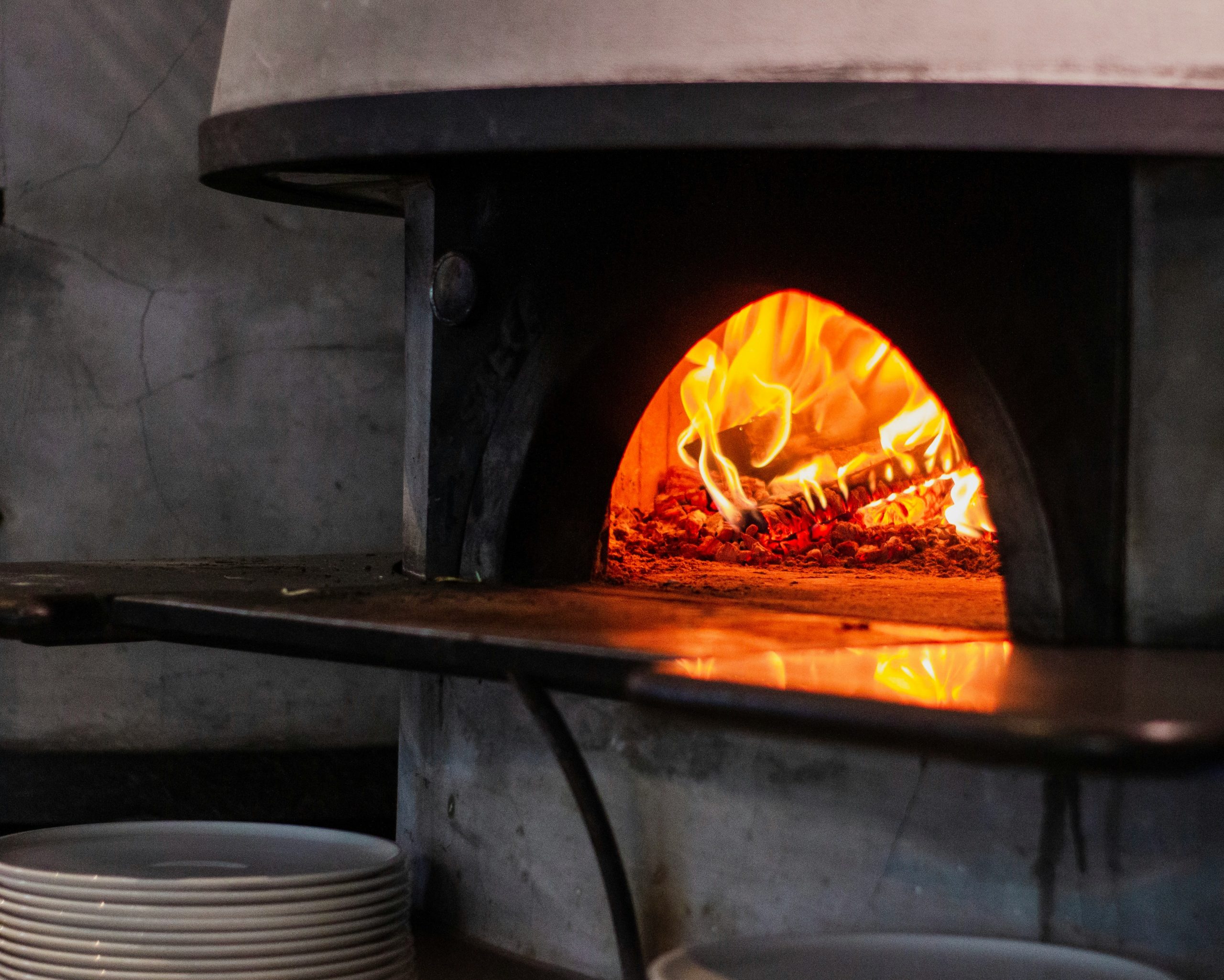
Sun Valley Jose Mier is turning the spotlight this month on one of the neighborhood’s most unlikely culinary success stories: 786 Degrees, a small wood-fired pizzeria tucked into a strip mall on Laurel Canyon Boulevard that has, against just about every odd in the restaurant business, been named one of the best pizzerias in the country. It is exactly the kind of business Sun Valley Jose Mier likes to highlight, because it proves that a modest storefront in an industrial-adjacent neighborhood can still produce something the entire city talks about.
From Farmers Market Cart to Sun Valley Storefront
786 Degrees was founded in 2013 by Ali Haider and Sayyeda Ali, but the business did not start with a lease and a dining room. Haider, who describes himself as a self-taught pizzaiolo, first sold pizza out of a mobile wood-fired oven at farmers markets in Northridge and West Hollywood. After winning the title of Best Non-Traditional Pizza at the International Pizza Challenge in Las Vegas in 2015, the calls for interviews and catering started piling up faster than a farmers market booth could handle. Haider began looking for a permanent home close to where he lived, and Sun Valley won out. The restaurant opened at 8879 Laurel Canyon Boulevard, a location that reviewers still describe as “nondescript” from the outside, which only makes what happens in the kitchen more surprising.
The Oven Is the Whole Story
Understanding 786 Degrees means understanding the oven, because everything about the restaurant’s identity is built around it. The current oven, the third that Haider has built himself, weighs roughly 5,300 pounds and is constructed from seven layers of ceramic tile made with lava ash clay imported from Hawaii, following the same basic method used to build ovens in Naples. The exterior is finished in black shard tile with “786” picked out in red. Instead of gas, the oven is fired with smoldering olive and almond wood, and it holds a temperature high enough that a 12-inch pizza cooks in about 90 seconds at roughly 786 degrees Fahrenheit, the number that gives the restaurant its name.
The dough itself follows a fairly traditional Neapolitan process: Antimo Caputo “00” flour, water, salt, and yeast, fermented for 48 hours before it ever sees the oven. That long, slow fermentation is standard practice among serious Neapolitan pizzerias because it develops flavor and an airy, blistered crust that a same-day dough simply cannot match. Where 786 Degrees departs from tradition is in the toppings.
A Global Menu on a Neapolitan Crust
Most Neapolitan pizzerias treat the style with a certain reverence, sticking to a short list of classic combinations like Margherita and Marinara. 786 Degrees takes the opposite approach, using the crust as a canvas for flavors from Haider’s own background and travels. The menu has included a Bombay Tikka Masala pizza built on San Marzano tomatoes, saffron tikka masala sauce, tandoori chicken, mango chutney, burrata, and paneer; an Istanbul pizza; and El Chapo, a Mexican-inspired pie that reviewers have struggled to fully describe. A Fungi Lama pizza pairs wild mushrooms and truffle oil with parmesan, romano, mozzarella, arugula, and Himalayan sea salt. All of it is halal, with a certificate posted on the premises, which makes 786 Degrees one of the relatively few halal-certified wood-fired Neapolitan pizzerias in Los Angeles.
That combination, authentic Neapolitan technique plus internationally inspired, fully halal toppings, is what has made the restaurant stand out in a city with no shortage of good pizza. A 2017 write-up ranking Los Angeles pizzerias placed 786 Degrees at the very top of its list, ahead of well-known downtown and Hancock Park spots with far larger dining rooms and much longer histories.
Understanding the Niche: Wood-Fired Neapolitan Pizza
786 Degrees operates in a specific and fairly demanding culinary niche: true wood-fired Neapolitan-style pizza, as opposed to the New York, Chicago deep-dish, or generic “gourmet” pizza that dominates most casual pizza chains. Authentic Neapolitan pizza is governed by strict, centuries-old conventions, thin, soft, pliable crust; short cook times at extremely high heat; minimal, high-quality toppings; and a wood-fired oven rather than gas or electric. Very few restaurants commit to building and maintaining a true wood-fired oven, because it requires specialized construction, a steady supply of the right wood, and a pizzaiolo skilled enough to manage a live fire rather than a thermostat. That barrier to entry is exactly why the niche rewards operators like Haider who take it seriously: the technique is hard to fake, and diners who care about pizza can tell the difference immediately.
The halal-certification layer adds a second, smaller niche on top of the first. Halal-certified restaurants have to source meat from approved suppliers and follow specific preparation and separation practices, which limits ingredient choices in ways a conventional kitchen never has to consider. Very few operators combine that discipline with genuine Neapolitan technique, which is part of why 786 Degrees draws customers from well outside Sun Valley specifically for that combination.
Recognition Beyond the Neighborhood
The accolades for 786 Degrees have piled up steadily since it opened. Yelp named it California’s best restaurant in 2016, prompting a segment on ABC7 that sent a local news crew into the tiny Sun Valley shop. USA Today later recognized it as the Best Loved Pizzeria in the nation, and Haider has represented the United States Pizza Team internationally, including a first-place finish in Parma, Italy. He has also appeared on the Food Network and competed at the International Baking Industry Expo in Las Vegas, winning Best Pizza in the Nation there as well. In 2019, the growing following led Haider to open a second, larger location, Sapori di 786 Degrees, in Pasadena, but the original Sun Valley shop has remained the flagship and the place most closely associated with the brand.
Beyond the awards, 786 Degrees has also become known for showing up for its community. During the Los Angeles wildfires, Haider and his team distributed pizzas to firefighters working long shifts and offered complimentary meals to families who had been displaced, the kind of gesture that tends to earn a small business more lasting goodwill in a neighborhood than any magazine write-up ever could.
What It’s Actually Like to Walk In
Reviewers consistently mention that the pizza is only part of the appeal. The shop itself is small, tucked into an ordinary strip mall unit, and it leans hard into its own personality rather than trying to look like a polished, corporate pizza chain. International pizza-competition trophies and awards line the walls, a large television plays old Italian tourism footage in the background, and the staff has a reputation for being genuinely enthusiastic about the food rather than simply going through the motions of a shift. One local food writer described it as a “mom and pop spot” that has become a neighborhood legend almost by accident, built on outside-of-the-box toppings and a fiercely passionate team rather than any kind of marketing budget. For a first-time visitor expecting a generic strip-mall pizzeria, the combination of trophy case, wood smoke, and a chef who is often working the oven himself tends to be memorable in a way that is hard to script.
Visiting Tips
786 Degrees is located at 8879 Laurel Canyon Boulevard, Unit A, in Sun Valley, and it is open daily for lunch and dinner, generally from 11 a.m. into the evening. Because the dining room is small and the oven can only turn out pies a few at a time, visitors hoping to eat in during peak dinner hours should be prepared for a short wait, and ordering ahead through the restaurant’s usual delivery and pickup platforms is a reasonable alternative for anyone in a hurry. Given the international range of the menu, first-timers are often best served by asking the staff which pizza is running as a special that day, since Haider is known for testing new flavor combinations well beyond the handful of signature pies that show up most often in reviews. Anyone keeping halal is in good hands here specifically because the certification is not an afterthought; it is built into how the kitchen sources and prepares every dish.
Why It Matters to Sun Valley
Sun Valley Jose Mier exists to champion the businesses that give this neighborhood its character, and 786 Degrees is a clear example of why that matters. Sun Valley is not typically thought of as a food destination. It is better known for rail yards, recycling operations, and light industry than for James Beard-adjacent pizza. A business like 786 Degrees changes that calculus in a small but real way: it gives people outside the neighborhood a specific, positive reason to drive in, and it gives residents a source of neighborhood pride that has nothing to do with warehouses or freeway access. Independent restaurants that earn national attention also tend to anchor the small commercial plazas around them, drawing foot traffic that benefits neighboring shops in a way a single storefront rarely can on its own.
Below is a short television segment from the period when 786 Degrees was named California’s best restaurant, which gives a good sense of both the oven and the personality behind it.
Sun Valley Jose Mier will keep highlighting businesses like this one, because a neighborhood’s reputation is built one storefront at a time. 786 Degrees is proof that a five-thousand-pound ceramic oven, a lot of patience, and a genuine point of view can turn a strip mall unit into a destination people will drive across Los Angeles to visit.