
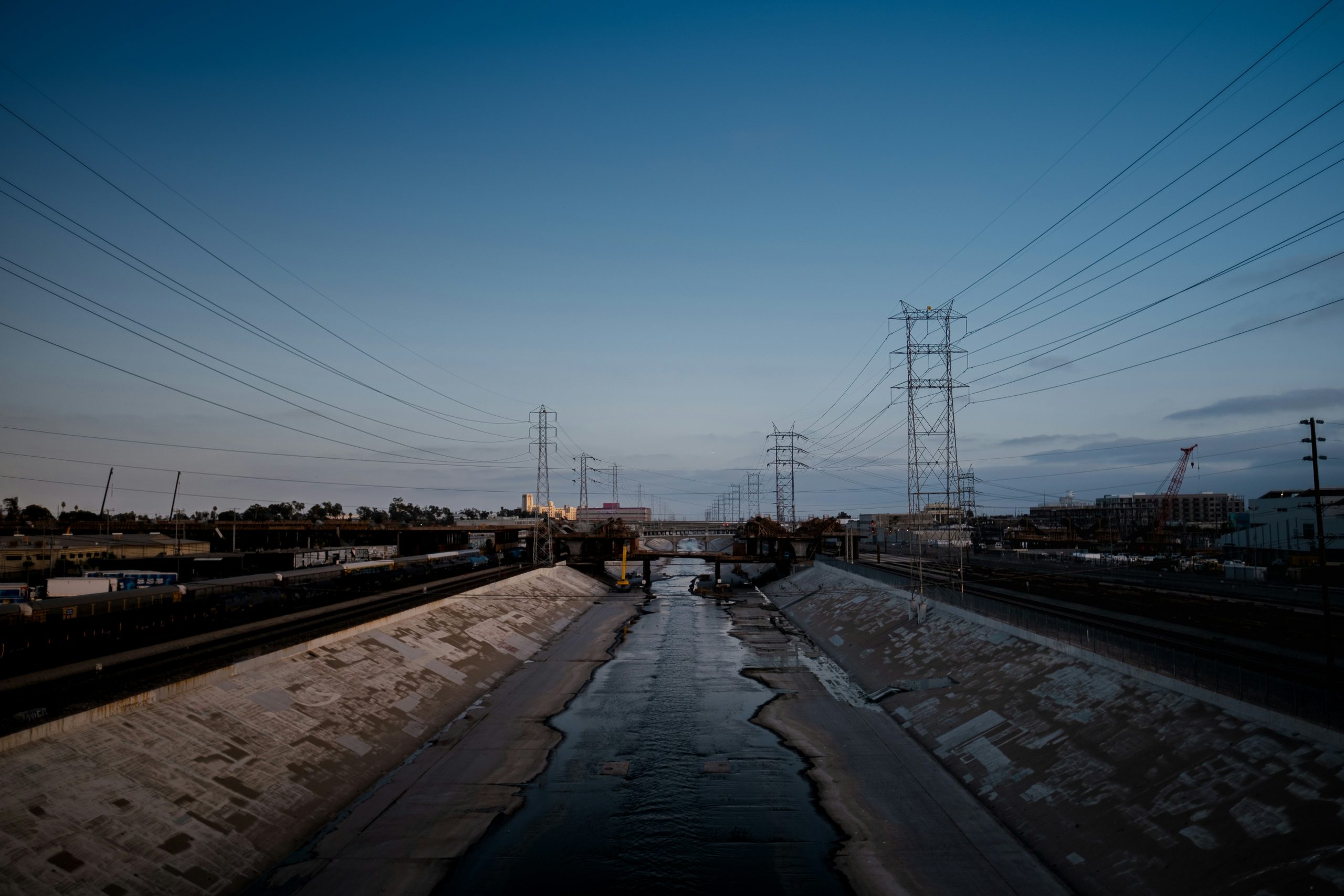
Sun Valley Jose Mier likes looking beyond the obvious landmarks to the places and projects that quietly shape everyday life in our corner of Los Angeles. One especially interesting subject is the Valley Generating Station, the cluster of tall smokestacks that has long been part of the San Fernando Valley skyline. The facility represents an important chapter in the region’s energy story—and a potential transition as Los Angeles plans for a different kind of energy future.
A Familiar Part of the Valley Skyline
Large utility facilities are easy to overlook until we stop to consider what they do. Electricity powers homes, businesses, streetlights, schools, workshops, refrigeration, communications, and the countless devices people rely on throughout the day. The Valley Generating Station has been one visible part of the infrastructure supporting the Los Angeles area. Its tall stacks have also become a recognizable industrial feature for people traveling through the Valley.
Power stations are not simply buildings with machinery inside. They are part of a much larger system involving fuel or other energy sources, transmission lines, substations, grid operators, and the distribution network that delivers electricity to customers. Keeping that system reliable requires careful planning, maintenance, and investment. For a community with homes, warehouses, manufacturers, and small businesses, dependable power is essential background infrastructure.
Why the Energy Landscape Is Changing
Los Angeles, like many large cities, is working to reshape how it generates and manages energy. Climate goals, air quality, changing technology, and the need for dependable electricity all influence long-term decisions. Renewable sources such as solar and wind have become more important, while batteries and other storage technologies can help balance supply and demand when generation varies.
Moving toward a cleaner energy system is not as simple as switching one machine off and another on. Electricity must be available when customers need it, including evenings, hot weather, and periods when renewable generation is lower. Grid planners therefore consider a combination of generation, storage, transmission capacity, demand management, and reliability resources. Major changes usually happen over years and require coordination among city agencies, utilities, regulators, engineers, and the communities affected.
What Has Been Said About the Valley Generating Station?
The City of Los Angeles Council District 6’s public information about Sun Valley identifies the Valley Generating Station’s smokestacks as a local landmark and says the site is expected to make way for a renewable-energy hub. That description points to a significant potential change in the area’s industrial landscape. The precise design, schedule, construction phases, and eventual mix of technologies should be confirmed through current city and utility announcements rather than assumed from a broad description.
A renewable-energy hub could mean different things depending on the final plan. Modern energy sites may involve battery storage, electrical equipment, grid-support infrastructure, or other technologies that help integrate cleaner power. The phrase alone does not confirm which components will be built at this particular site. That is why residents who want to follow the project should look for official planning documents, environmental reviews, public meeting materials, and announcements from the agencies responsible.
Why This Matters to Local Residents and Businesses
Energy decisions can have consequences well beyond a facility’s property line. Reliable electricity matters to manufacturers running equipment, food businesses keeping products refrigerated, medical offices serving patients, and households relying on air conditioning during heat waves. At the same time, neighbors may reasonably want clear information about construction impacts, traffic, noise, air quality, safety, and how a new facility will fit into the surrounding area.
These questions are best answered with specific, published project details. Residents can ask what technologies are proposed, how the site will connect to the grid, what safeguards are planned, and how construction will be managed. They can also ask how the project relates to Los Angeles’s broader energy goals. Clear public information helps people understand both the potential benefits and the practical trade-offs of infrastructure changes.
From Industrial Landmark to Future Infrastructure
Sun Valley has a strong industrial identity. Warehouses, manufacturers, transportation businesses, and utility infrastructure are part of the working landscape. As energy technology changes, the area may continue to host important infrastructure, even if the equipment and purpose of a particular site evolve. A transition to newer energy systems would reflect a wider pattern: cities must update the systems that serve them while balancing reliability, environmental objectives, cost, and neighborhood needs.
It is also worth remembering that energy transitions involve people as well as technology. Workers maintain and operate facilities, engineers plan complex systems, and local residents live with the results of land-use decisions. A successful project needs sound technical design and communication with the community. Information about timelines, construction, public meetings, and final project features should be easy to find and updated as decisions are made.
How to Follow the Story
For reliable updates, start with the City Council District 6’s Sun Valley community page and official City of Los Angeles resources. Look for new planning documents or public notices that identify the responsible agencies and describe any proposed project in more detail. If public meetings are announced, their agendas and supporting materials can help explain what has been decided and what remains under consideration.
Because infrastructure plans can change, readers should distinguish between an announced goal, a proposed design, an approved project, and completed construction. These are different stages. Checking the date and source of a report is a simple way to avoid treating an early proposal as a finished plan.
A Changing Skyline, a Continuing Community
The Valley Generating Station is a reminder that the places we see every day often have a bigger story behind them. Its smokestacks have represented the region’s energy infrastructure for generations, while plans for a renewable-energy hub suggest that the site may play a different role in the future. Whatever the final design and schedule, the topic raises important questions about how Los Angeles will power homes and businesses reliably while adapting to new technology and environmental priorities.
For Sun Valley, the key is to stay informed, ask practical questions, and follow verified updates as the project develops. Local infrastructure may not always attract the attention of a new restaurant or neighborhood event, but it shapes how the community works every day.
Video: Energy Infrastructure and the Clean-Energy Transition
The video search below provides YouTube results related to energy infrastructure and the transition toward cleaner power. Check the selected video’s publisher and date before relying on it for project-specific information; a general energy video does not necessarily describe the Valley Generating Station itself.